Key Facts: RV Awnings & Outdoor Living in 2026
- Two fabrics dominate: coated vinyl, which is waterproof and sheds rain, and solution-dyed acrylic such as Sunbrella, which breathes and holds its color far longer.
- Fabric lifespan: vinyl typically lasts about 5 to 8 years; acrylic runs roughly 10 to 15 years, with the gap widening in hot, sunny climates where UV does the most damage.
- Awning sizes: patio awnings are sold in roughly 1-foot increments from about 8 feet to 21 feet, with around 8 feet of projection being the common pull-out depth.
- Outdoor mats: reversible polypropylene rugs come in sizes like 6x9, 9x12, and 9x18 feet, usually priced between $30 and $120 depending on size and brand.
- Price ranges: a complete manual awning runs about $200 to $700; a powered unit with sensors and a remote lands around $800 to $2,500 and up.
- Wind safety: most RV awnings are not built for sustained winds above roughly 20 to 25 mph, a threshold educators cite rather than a certified standard. Retract in wind, rain, or whenever you leave the site.
- Established brands: Dometic, Carefree of Colorado, and Lippert (Solera) supply most of the awnings on North American rigs; Sunbrella, made by Glen Raven, is the best-known premium acrylic fabric.
RV Outdoor Living in 2026
The awning is the cheapest square footage you will ever add to a camper. Roll it out at a site and the gravel pad underneath stops being a parking spot and starts being a room. That is the whole appeal, and it explains why owners fuss so much over a strip of fabric and two aluminum arms.
Most of the questions our readers send fall into a short list: which fabric holds up, whether a powered awning earns its price, what to put on the ground, and how hard the wind has to blow before the thing tears. None of those answers are complicated, and most bad outcomes trace back to the same two mistakes: leaving the awning out in weather it was never built for, and storing it wet.
This page is the starting point. It walks through the awning, the mat under it, the maintenance that decides whether the fabric reaches five years or fifteen, and how the pieces fit into a setup you actually want to sit in. Where a topic deserves its own page, our guides on choosing an awning, awning fabric, and patio setup go deeper. RVAwningInfo is reader-supported and takes no manufacturer sponsorship, so the brands and specs below come from manufacturer documentation and retailer catalogs, not a press release.
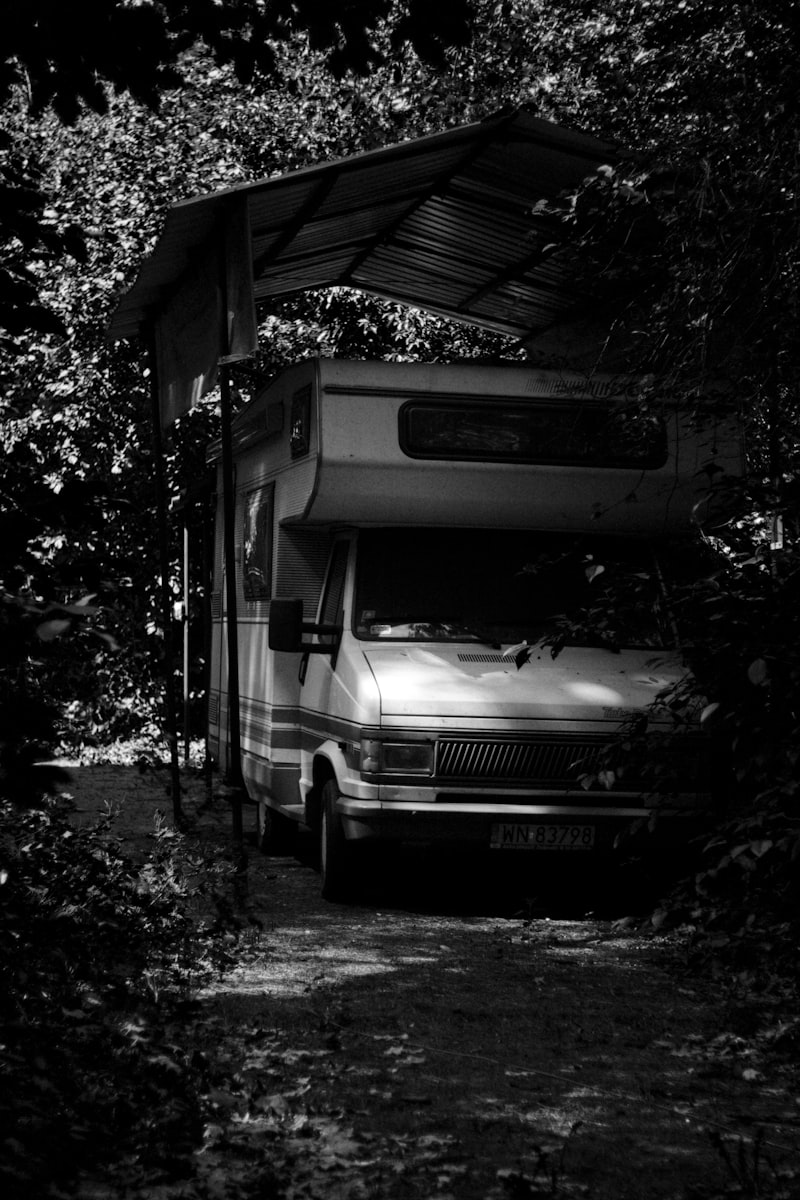
Understanding RV Awning Types
Strip away the marketing and RV awnings sort into a few real categories. The first split is how you operate it. A manual awning uses a hand crank or a pull strap, often with a spring-assisted drive head that takes some of the fight out of the roll. Carefree's Pioneer and Fiesta, Dometic's 8500, and Lippert's 1000-series Solera all live here. They are the budget tier, they have almost nothing to break, and a stuck manual awning is usually one you can still wrestle closed by hand.
Powered awnings run on a 12-volt motor, sometimes 110-volt on the larger box models, controlled by a wall switch, a remote, or a phone app. Dometic's 9100 and 9200, Carefree's Eclipse and Travel'r, and Lippert's Solera Power line cover most of this segment. Nearly all keep a manual override, which matters more than the brochures admit: Solera lets you drive a dead motor closed with a power drill, the difference between a quick fix and a tarp bungeed over your slide for the rest of the trip. The premium models add wind sensing, where systems like Dometic's WeatherPro and Carefree's Direct Response retract on their own in sustained wind, even with nobody at the site. Useful if you leave the rig parked while you hike, though it is one more sensor and motor that can fail.
The second split is the awning's shape. Open roller-style awnings, the kind most North American rigs carry, leave the rolled fabric exposed on a tube between two arms. Box or cassette awnings, common on European caravans and on heavy-duty models like Carefree's Mirage, seal the fabric inside an aluminum case when closed, which protects it from sun and grime but costs more and weighs more. Our electric RV awning guide breaks down the motors and overrides.
So which do you buy. A weekend camper who values simplicity and a lower price is well served by a manual unit; someone who camps often and wants to push a button at the end of a long drive earns back the cost of a powered awning with auto-retract. There is no universally correct answer, only a match between how you camp and what you pay for.
RV Awning Mats and Ground Covers
The mat is the most overlooked part of the setup and one of the cheapest to get right. Without one, the dirt and sand under your awning ends up tracked into the rig and you spend the trip sweeping. With one, the shaded area reads as floor and the whole space feels finished.
The workhorse material is reversible woven polypropylene. It is plastic, which sounds unglamorous, but the weave matters: it lets air and water through, so it dries fast, resists mildew, and will not smother the grass underneath the way a solid tarp does. Camco, Prest-O-Fit, and Faulkner all make versions, and Faulkner built its reputation on these mats. The reversible design also doubles your options and lets you flip a stained side down.
Size is where people guess wrong. A 9x12 covers a small sitting area; the long runs, 9x18 and similar, stretch the length of the rig into one continuous floor. Match the mat to the space you actually use, since anything larger than your chairs and table just collects debris at the edges.
| Item | Common sizes | Typical price range | Notes |
|---|---|---|---|
| Reversible patio mat | 6x9, 9x12, 9x18 ft | ~$30–$120 | Woven polypropylene; breathable, mildew-resistant; long runs span the rig |
| Manual awning (complete) | 8–21 ft | ~$200–$700 | Hand crank or pull strap; smaller sizes at the low end, 18–21 ft at the top |
| Power awning (complete) | 8–21 ft | ~$800–$2,500+ | 12V motor; sensors, remote, and LED lighting push toward the high end |
| Replacement vinyl fabric | 8–21 ft | ~$120–$400 | Fabric only; waterproof; typical life ~5–8 years |
| Replacement acrylic fabric | 8–21 ft | ~$200–$800 | Fabric only; Sunbrella at the high end; typical life ~10–15 years |
| LED awning light kit | Trim-to-fit strips | ~$6–$80 | 12V, adhesive-backed; color-changing and branded systems cost more |
Beyond the mat, a few accessories finish the floor. Outdoor rugs layer over the mat for a softer feel. Side sun-shade panels hang from the extended roller down to the ground and block the low, late-day sun the awning itself cannot reach. Our RV mats and outdoor mat guides cover sizing and materials in detail.
2026 RV Awning Market Trends
The clearest trend is not a sales figure, it is a set of features migrating downmarket. Wind-sensing auto-retract, once reserved for top-tier units, now appears across more of the powered lineups from Dometic and Carefree. App and Bluetooth control has spread the same way, with Carefree Connects letting owners operate an awning from a phone. These conveniences used to justify a premium and are slowly becoming ordinary.
Fabric is where the choice has sharpened rather than changed. The two real options remain vinyl and solution-dyed acrylic. Vinyl is waterproof and the right call in wet, temperate regions where shedding a downpour matters. Acrylic breathes, runs cooler under direct sun, and keeps its color for years because the dye is locked into the fiber before the thread is woven, not printed on the surface. Sunbrella, the dominant acrylic brand, has made that fabric since 1961 and backs its awning grades with a 10-year limited warranty. For owners parked in the desert Southwest, the acrylic advantage in fade and heat is hard to argue with. Our Sunbrella awnings guide covers the fabric in depth.
Retrofit options have matured too. Lippert sells a Solera kit that converts a manual awning to 12-volt operation, standalone wind sensors bolt onto existing setups, and universal replacement awnings and arm kits now fit across Solera, Dometic, and Carefree hardware. A worn-out awning has become a fabric-and-hardware decision rather than a forced upgrade to a whole new system, and the replacement fabric route is usually cheaper than a full unit.
One thing has not changed: there is still no universal wind-rating standard for RV awnings. NFPA 1192, the construction standard the industry follows, does not rate awning wind resistance, and the makers who publish numbers assume ideal conditions. The practical guidance stays what it always was, which is to bring the awning in when the weather turns.
Essential Awning Maintenance Tips
Most awnings die of neglect, not age. Two habits decide whether your fabric reaches the high end of its lifespan range or the low end.
The first is storing it dry. Retract a wet awning and you trap moisture against trapped dirt, and mildew can take hold within a day or two. Here is the part that surprises people: the mildew does not eat the vinyl or the acrylic. It feeds on the organic film, the dust, pollen, and grime that settles on the surface. That is why a clean awning resists mildew and a dirty one does not, no matter which fabric you bought. When you have to roll up wet to leave, extend it again at the next stop and let it dry before final storage.
The second is reading the weather honestly. Most standard RV awnings, manual or powered, are not designed for sustained winds over roughly 20 to 25 mph, and gusts can damage one even when the steady wind sits below that line. The rule that protects the fabric is simple: if it starts to bounce or shake, bring it in. Retract it in wind, in rain, and any time you leave the rig unattended, because the storm that rolls through while you are off hiking does not care that you meant to be back sooner.
Cleaning is worth doing on a schedule. Mild soap, water, and a soft brush handle most of it; harsh chemicals do more harm than the dirt. Cold weather adds one caution for vinyl owners, since vinyl stiffens and can crack if you operate it in freezing temperatures, so leave it rolled when it is that cold. When fabric does fail, a small tear near the edge is often a repair rather than a replacement. Our repair guide covers patching, and the replacement guide walks through swapping fabric when patching is past helping.
A few accessories buy margin on a gusty afternoon. De-flapper clamps grip the fabric to the arm and stop the flapping that frays an edge; tie-down kits with ground stakes steady the awning in a breeze, and support cradles brace the roller tube. None of these turn a patio awning into a storm shelter, but they help.
Creating the Perfect RV Outdoor Space
A good outdoor space is layered, and the layers go on in order. The awning is the roof, the mat is the floor, and everything after that is comfort and light.
Lighting changes the space more than anything else for the least money. LED strips made for awnings run on 12 volts, peel-and-stick to the roller channel or the underside of the rail, and trim to fit your awning's length. Plain white strips run cheap; color-changing and branded systems cost more. The effect at dusk is the difference between a parking spot and a patio. Our awning lights guide covers wiring and mounting.
For sun and privacy, side panels and screen rooms do the heavy lifting. A mesh sun-shade panel hangs off the extended awning and blocks the low-angle light that slides in under the fabric in late afternoon. A full screen room attaches to the awning rail and encloses the shaded area, turning the patio into a bug-free outdoor room. Dometic, Carefree, and Lippert all make screen rooms built for the standard 8-foot projection, sized to common 10-to-21-foot awning lengths.
The point of all of it is to use the space, not to photograph it. A weekend camper might stop at a mat and a string of lights; a full-timer parked for a season builds out the whole thing, screen room and all. Both are right, because the best setup matches how long you stay and how you like to sit outside. Start with the awning and the mat, add light, and let the rest follow. Our patio setup guide pulls the layers into a working plan.
Frequently Asked Questions
What size RV awning do I need?
Your rig sets the size, not your preference. Patio awnings are measured by rail length, arm to arm, and run in roughly 1-foot increments from about 8 feet up to 21 feet, with around 8 feet of projection out from the wall. Replacing fabric? Measure from the center of one arm to the center of the other with the awning extended, and never measure off the old fabric, since aged vinyl and acrylic stretch and shrink and give a false number.
How long do RV awning fabrics last?
It depends on the fabric and the climate. Vinyl typically lasts about 5 to 8 years. Solution-dyed acrylic like Sunbrella runs closer to 10 to 15 years because the color lives in the fiber and the weave breathes instead of baking. UV is the main thing wearing fabric down, so a rig in constant desert sun ages faster than one that camps in the shade, and any awning stored wet and dirty fails well short of these ranges.
Are electric RV awnings worth the extra cost?
For some owners, yes; for others the money is better left in the bank. A powered awning rolls out at the push of a button, and auto-retract models can save the fabric by closing themselves in a sudden wind while you are away. That earns its keep if you camp often and park for days at a time. If you only pop the awning out a couple of weekends a year, a manual unit at a third to half the price does the same job with fewer parts to fail. Either way, make sure any powered model keeps a manual override.
What is the best mat material for under an RV awning?
Reversible woven polypropylene, for good reason. The open weave lets air and water through, so the mat dries quickly, shrugs off mildew, and will not kill the grass underneath the way a solid plastic tarp does. Camco, Prest-O-Fit, and Faulkner all make them, and the reversible design gives you two looks and lets you flip a dirty side down. Solid tarps are cheaper, but they trap moisture, which is exactly what you do not want under an awning.
How much does it cost to replace an RV awning?
Depends on whether you are replacing the fabric or the whole unit. Fabric alone runs roughly $120 to $400 for vinyl and about $200 to $800 for acrylic, with Sunbrella at the upper end. A complete manual awning lands around $200 to $700; a powered unit with sensors and a remote runs from about $800 to $2,500 and higher. Professional labor for a fabric swap adds roughly $75 to $400, much of it for the tense spring-detensioning step that makes the job risky to rush.
Can I repair a torn RV awning instead of replacing it?
Often, yes. A small tear or worn spot near the edge usually takes a patch or repair tape, and catching it early keeps a minor tear from running into a large one. Once the damage reaches the middle of the fabric, or the material has gone brittle and chalky from years of UV, replacement is the honest call.
What are the top RV awning brands in 2026?
Three names supply most of the awnings on North American rigs. Dometic carries the broadest range, from manual roll-outs to powered case awnings with wind sensors. Carefree of Colorado, in business since 1971, makes manual and powered patio awnings plus its Direct Response auto-retract system. Lippert, under the Solera brand, builds open roller awnings in manual, hybrid, and 12-volt versions. For premium fabric, Sunbrella, made by Glen Raven, is the best-known solution-dyed acrylic.
How do I prevent mildew on my RV awning?
Keep it clean and store it dry. Mildew does not feed on the fabric itself; it grows on the dust and film that collect on the surface, which is why a clean awning resists it and a grimy one does not. Wash it periodically with mild soap and water, and never roll up wet for long-term storage. If you must retract it wet to leave, extend it again at your next stop and let it dry fully first.
RVAwningInfo is reader-supported and editorially independent. No manufacturer sponsors this site or pays for placement, and the brands and specifications here come from manufacturer documentation and retailer catalogs. This is general information, not professional installation or safety advice; always follow your awning manufacturer's instructions and weight and wind guidance, and see our risk disclosure for more.
Authoritative sources & references
Editorially reviewed: June 17, 2026